Say No To Nanny

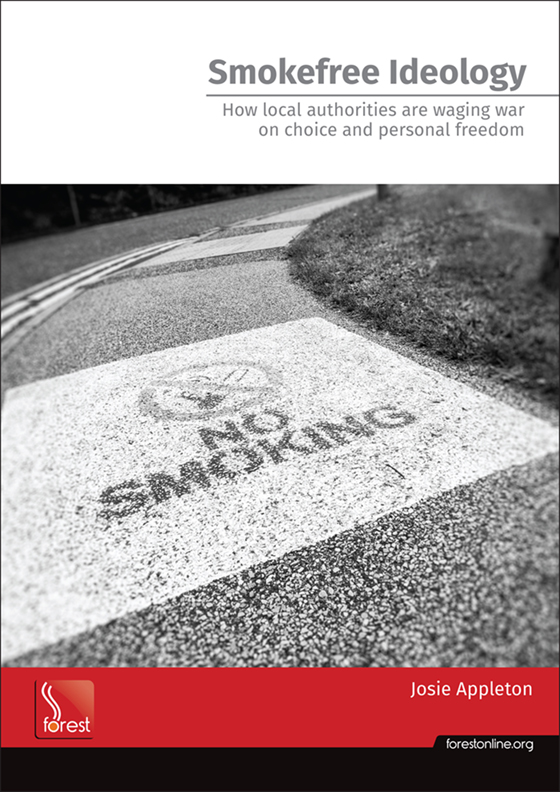
Smokefree Ideology


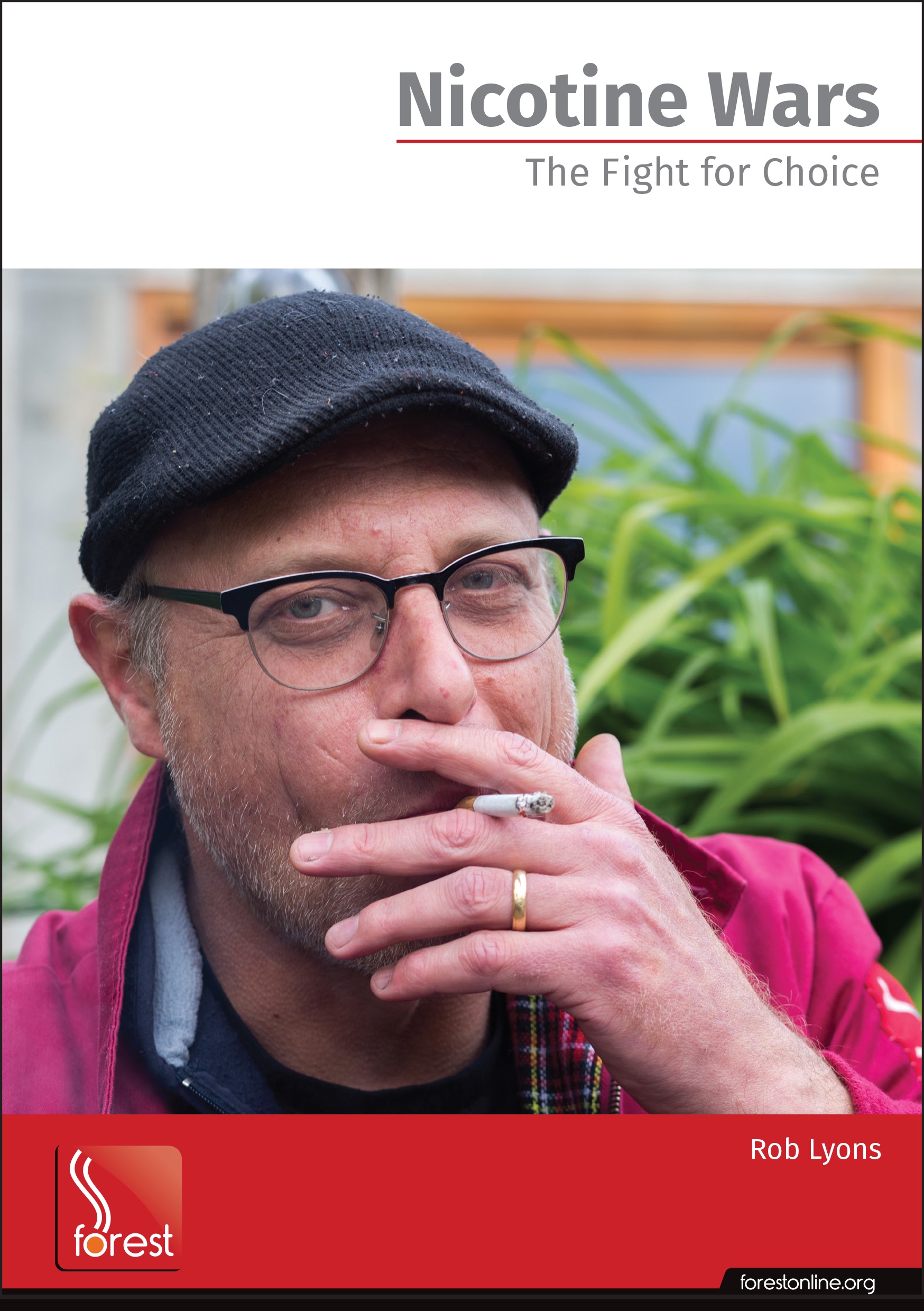
Nicotine Wars


40 Years of Hurt

Prejudice and Prohibition

Road To Ruin?

Search This Site
The Pleasure of Smoking

Forest Polling Report

Outdoor Smoking Bans

Share This Page
Powered by Squarespace
Friday
May152020

Rally Against Debt

You know how Facebook likes to share memories?

Well, a photo posted on Facebook on May 15, 2011, popped up on my timeline this morning and I appear to be taking part in some sort of protest.

The thing is, I genuinely didn’t know any of the other people in the picture or why I was there.

The number of demos I’ve taken part in can be counted on the fingers of one hand so you would think I might remember, but I didn’t have a clue until I delved deep into this blog and found this:

Was the Rally Against Debt a success?

As someone who was there, I thought it was a pretty decent effort. There were more than enough people (and press photographers) to make you feel you were part of an 'event'.

I counted eight speakers. Mark Littlewood of the Institute of Economic Affairs and Matthew Sinclair of the TaxPayers' Alliance provided the necessary gravitas, but documentary film maker Martin Durkin was perhaps the pick of the bunch. His speech rivalled Nigel Farage's for laughs and his enthusiasm was equally infectious.

Compared to the TUC's Alternative March the turnout may have been small, but what did people expect? Unlike the union-sponsored event, Rally Against Debt didn't have a penny to its name when the idea was promoted on Facebook a few weeks ago. Bar some logistical support from the TaxPayers' Alliance, I don't think much changed, financially, ahead of yesterday's event.

Media-wise, however, Rally Against Debt was a success, punching well above its weight. "Is that a protest or a bus queue?" sneered one left-wing blogger, but online you will find a string of reports – in the Guardian, Telegraph and Daily Mail. BBC News featured a report and even a video. You can't buy that sort of coverage (and I should know!)

The irony, of course, is that the debt the nation faced in 2011 is pocket money compared to what we will owe when the coronavirus crisis is over.

Most people would agree, I think, that the Government’s initial response, financially, was understandable and humane.

Moving forward decisions are going to become harder and more controversial. I don’t have the ‘right’ answer - I don’t think anyone does - but I wonder how soon someone is going to be brave enough to organise another Rally Against Debt!

PS. I lied about not knowing anyone in the picture - I can see my son's partially obscured head.

Thursday
May142020

Creeping prohibition

A new report published today by Forest challenges the government's attachment to "creeping prohibition".

Rob Lyons, author of ‘Prohibition: A bad idea that won’t go away’, argues:

  • 19th century campaigns against alcohol were in favour of temperance – that is, abstinence as a moral choice for self-improvement – rather than bans based on the assumption that governments know what is best for us.
  • Prohibition of alcohol in the United States in the 1920s created a black market that enriched mobsters and encouraged law-breaking, bribery and corruption.
  • Creeping prohibition is now a feature of the war on tobacco. Ten packs, smaller pouches of hand-rolled tobacco, flavoured rolling tobacco and menthol-flavoured cigarettes have all been banned. Taxation has also been used as a weapon to effectively prohibit the poor from smoking.
  • Regulations applied to tobacco are increasingly being used as a template for any product considered ‘unhealthy’ by health campaigners.
  • Banning products will not put an end to demand. The major beneficiaries of the ban on menthol cigarettes will be criminal gangs and illicit traders. Victims will include law-abiding consumers and legitimate retailers.
  • The health risks associated with smoking are well known. In a free society adults must be allowed to make the ‘wrong’ choices. As long as we are not harming other people it is not for government to restrict our choices without very good reason.
  • Prohibition robs adults of choice and, in an important sense, robs us of our humanity as well. Even those with little interest in the rights of smokers to choose what flavour of cigarette they smoke should be worried. After ten packs, flavoured rolling tobacco and menthol cigarettes, what will governments decide to ban next?

‘Prohibition: A bad idea that won’t go away’ is available here.

Wednesday
May132020

Public divided on menthol cigarette ban

If politicians think the ban on menthol cigarettes will cut the number of smokers, the public doesn't share their confidence.

A poll of 2,019 adults, commissioned by Forest and conducted by Populus last week, found that only 16 per cent think the ban on menthol cigarettes will reduce smoking rates.

None of the findings were particularly startling but given that 82 per cent of respondents were non-smokers (51 per cent had never smoked, and 31 per cent used to smoke but had now given up) it was interesting to note that all respondents were divided equally on whether the ban on menthol cigarettes was a reasonable or an unreasonable restriction on adult consumer choice.

For example:

  • 35 per cent of all respondents said it was a reasonable restriction, while 38 per cent said it was unreasonable (and the rest said 'Don't know')

Public opinion was similarly split on whether anti-tobacco regulations have gone ‘far enough’.

  • 36 per cent of the public agreed that anti-tobacco regulations had gone ‘far enough’, 36 per cent disagreed, and 28 per cent neither agreed nor disagreed

Our headline finding concerned the number of smokers who were unaware of the ban.

According to the Populus survey, 39 per cent of the smokers polled didn't know about the ban which starts next week. This suggests 2.8 million smokers have no idea menthol cigarettes are about to be prohibited.

There’s a large market for menthol and capsule cigarettes in the UK (they account for one in four cigarettes sold) so there could be a lot of confusion when consumers visit their local store and find their favourites menthol brands are no longer on sale.

To add to the uncertainty, which affects staff as much as consumers, the word ‘green’ will still appear on a variety of non-menthol brands that have only recently been launched.

The aim, clearly, is to encourage brand loyalty because the consensus is that most menthol smokers, far from quitting or switching to e-cigarettes or heated tobacco, will simply switch to non-menthol combustibles.

Other alternatives include flavour cards that infuse non-flavoured cigarettes with a menthol flavour and menthol cigarillos, but the reality is that most smokers enjoy the act of smoking and flavour is not the defining factor.

Anyway, you can read the results of the survey, plus a quote from me, here.

See also: Almost three million smokers unaware of menthol ban (Talking Retail)

Wednesday
May132020

UK's largest vape retailer targets a smoker free future

Last week there was the contentious claim that 'More than 300,000 UK smokers may have quit owing to Covid-19 fears'.

As I explained here, that figure seemed to be extrapolated from the responses of six former smokers (from a total of 310) who responded to an ASH/YouGov survey, but the media can't resist a headline-grabbing stat, even one that appears to have little relation to reality, and so it was reported far and wide.

This week the results of two more surveys have been reported online but with hardly any coverage:

Data published by online vape retailer VPZ has revealed that in the past month, more than 1,100 NHS staff members have used the supplier’s discount scheme to access products to help them quit smoking.

That may be true but what struck me was a quote by Doug Mutter, director at VPZ, the UK's 'biggest vaping retailer'. According to Mutter:

“Smoking and coronavirus is a lethal combination and NHS staff are more acutely aware of this than anyone.

That's a hell of a claim but is it supported by the facts when many people, including academics, seem to think the jury is still out on the issue of smoking and coronavirus?

On Monday the Mail Online – which has devoted endless column inches to the subject and has been extremely fair, reported:

More evidence emerges that smokers are protected from coronavirus: Italian study finds them FIVE TIMES less likely to end up in hospital (but almost twice as likely to die if they do).

It's true that several studies have suggested that if you are a smoker and are hospitalised with Covid-19 the risks of ending up in intensive care are higher than if you are a non-smoker, but the same studies (and many more besides) have also suggested that the number of smokers who are hospitalised with Covid-19 is significantly smaller than might be expected based on the smoking rates in the country where the relevant research took place.

To claim, without any qualification, that "Smoking and coronavirus is a lethal combination" is stretching the truth somewhat.

Yesterday, in the run-up to next week's ban on menthol cigarettes, it was also suggested that 'Almost half a million smokers will quit as a result of the menthol ban, study reveals' (Talking Retail).

Again, what struck me was not the study – which I haven't seen because there wasn't a link to it – but the quote by Vape Club director Dan Marchant:

“It’s great to hear that the steps being taken are set to have a real effect on the number of tobacco smokers in the UK, and take us closer towards the government’s 2030 UK smoking targets."

'Steps?' Does he mean the prohibition of menthol and capsule cigarettes?

I don't blame vape retailers for doing everything they can to promote their businesses and encourage smokers to switch, but it does annoy me that while Forest frequently defends vaping and publicly criticises vaping bans, many vaping advocates and entrepreneurs have no problem throwing smokers under the bus and supporting any anti-smoking initiative whether it be 'quit for Covid' or the prohibition of menthol cigarettes.

I understand why they do it but it's not a good look and it will come back to bite them, I'm sure.

Compare it to the annual VApril campaign. VApril takes a softer more educational approach, rarely if ever adopting an anti-smoking tone, and to my mind it is all the better for it.

PS. In my next post I will have some information about a new Forest survey, conducted by Populus and published earlier today. Watch this space.

Sunday
May102020

Menthol cigarette ban survey

Ahead of the forthcoming ban on menthol cigarettes, Forest is conducting a short survey on the subject.

Most of the questions can be answered by all smokers. A handful are targeted exclusively at smokers of menthol cigarettes.

A link to the survey was posted on the Friends of Forest Facebook page yesterday. That led to almost 100 responses.

This morning the survey was sent via email to the Forest subscriber list and in the first two hours we received a further 200 completed forms.

Our target was 300 but now we have passed that we want more so if you haven’t done so already please complete and submit the survey today.

It starts here and should take no more than three minutes of your time.

Thank you!

Update: The number of completed surveys is currently 480.

Sunday
May102020

To mute or not to mute

Several weeks ago Chris Snowdon blocked his 1,000th account on Twitter. He wrote about it here:

To mute is human, to block is divine‘.

To the best of my knowledge only two people have blocked me - radio and TV presenter Jeremy Vine and former Tory MP Nicholas Soames.

Vine is a cycling advocate - nothing wrong with that - who frequently posts video clips of cyclists being harassed or endangered by other road users.

Some of the clips - often taken by a camera on his own cycling helmet - are truly gobsmacking. Sometimes however they suggest the cyclist is at fault but Vine can’t see it.

He blocked me because on a couple of occasions I suggested - not impolitely - that the cyclist not the driver may have been to blame.

Soames blocked me for insinuating he was a pompous prat. Fair cop. In his shoes I might have done the same.

Unlike Snowdon, the number of people I have blocked can be counted on the fingers of one hand although, to be fair, there is probably a reason for that.

One, I have a fraction of the followers he has. Two, I don’t attract the same hate-fuelled mob and their persistent ‘Who funds you?’ mantra.

Generally I wouldn’t block someone I’ve never engaged with, doesn’t know me from Adam, and will never know I’ve blocked them because ... what’s the point?

Blocking should be a statement and if I block someone I want them to know I’ve blocked them otherwise it’s a waste of time.

Muting feels less confrontational because the other person will never know and for me that’s a good compromise.

Often it may be someone I chose to follow. I could ‘unfollow’ them but if I know them (or they know me) that seems quite passive aggressive, and if they have one of those apps that alerts them to people who have recently followed or unfollowed them you risk years of smouldering resentment (even the cold shoulder) if the person you have unfollowed knows you.

(I have one of those apps and whenever I get an alert to say someone has unfollowed me it’s far more interesting than news of a new follower. And if I know them I never forget. Just saying.)

Most of the time I don’t know the person who has unfollowed me. Often it’s someone - a stranger - who may have followed me in the expectation that I would follow them back, but if I haven’t (and I rarely do because I like to keep the list of people I am following to a minimum) they subsequently unfollow me, which is fair enough.

It suggests however that their principal reason for following me was to build up their own list of followers and I can’t be doing with that. In fact, a friend of mine has a rule that I have adopted too.

Unless he knows the person or has a specific reason to follow them, he never follows anyone who is following more than 1,000 people.

I totally get that. If someone follows me and I see that they follow thousands of people, why would I follow them? They clearly have no interest in anything I tweet because it will flash across their screen in the blink of an eye. The chances of them ever seeing my tweets are minimal.

No, what they are trying to do is increase their own number of followers. I see it all the time. A person who follows 10,000 people has 8,000 followers. Go away! Don’t waste my time, or yours.

But I digress.

More often than not the people I mute are people I don’t follow but their tweets appear on my timeline because they’ve been retweeted or liked by someone whose account I am following.

It would be silly to block these people. They don’t follow me so they will never know or care. Blocking them would be a completely pointless act when I can achieve the desired effect - removing them from my timeline - by muting them.

And so, dear reader, that is what I have been doing.

Social media has always been a mecca for opinionated armchair experts but the coronavirus has brought out the worst in many people - on Twitter, especially.

The negativity and blame game is not just tedious, polls suggest it’s completely unrepresentative of the population at large, most of whom have accepted the current situation and are making the best of it.

To be fair, Twitter is a good medium if you want breaking news and the occasional laugh so I will continue to use it but I will mute anyone whose tweets raise my blood pressure or make me inwardly shout “Fuck off!” because of their persistent negativity.

The list includes many household names including just about every lobby correspondent (Peston, Rigby et al).

It also includes anyone who thinks the government has got its response to Covid-19 ‘wrong’ and is persistently pointing the finger at politicians who are plainly doing their best in difficult and unchartered territory.

They may be right - only time and the inevitable post-coronavirus inquiries will tell - but at the moment I don’t want to read their asinine remarks and half-baked bile, even when restricted to 280 characters.

Life is so much better thanks to the mute button. In fact, I feel so much calmer I doubt I shall ever let these people back in to my life.

As PG Wodehouse might have said, pip pip!

Friday
May082020

Postscript on Pritchard

There’s an amusing postscript to yesterday's piece about Conservative MP Mark Pritchard.

But first, I was disappointed that the Shropshire Star appeared to ignore our response to their story about his call for the government to introduce rules to further restrict the places where smokers can light up if and when lockdown is eased.

You can read the Star report here and our subsequent response on the Forest website here.

This morning, in the absence of a follow-up report highlighting our opposition to Pritchard's intervention, I emailed the paper to say:

I am curious why you have not reported our criticism of Mark Pritchard’s call for new rules on smoking if the government decides to relax the lockdown on pubs, cafes and restaurants with outside seating.

Mr Pritchard’s comments have provoked a lot of negative comment on social media yet your original report included not a single dissenting voice.

Mr Pritchard’s position is based not on evidence of risk to non-smokers but on his own subjective dislike of other people smoking in his vicinity. His views deserve to be challenged.

Mr Pritchard - with your acquiescence - appears to treat the Shropshire Star like a parish noticeboard. If this is the level you aspire to no wonder local newspapers are struggling to retain readers.

Within minutes I received a reply:

Thank you for your email ... The story will be updated this morning.

I now feel a bit guilty about the waspish tone of my email, especially the final sentence which was arguably a bit below the belt.

On the other hand, I do find it annoying that I spend so much time chasing journalists to provide even a semblance of balance on smoking-related issues.

I've also been reading the responses to a tweet by Pritchard in which he repeated his call for new rules on smoking in external public areas outside pubs, cafes and restaurants and it doesn't make pretty reading.

Comments include:

Really? Make it even more difficult for businesses? Can't people choose where they want to sit outside with or without smokers ? Or do you feel you need to inflict more 'rules' on adults.

To be fair, whilst the nation is under virtual house arrest, now really isn't the time for this sort of authoritarian finger wagging.

Oh God ....

Ye gods. Get a grip.

If smokers can’t use beer gardens then they should be allowed to smoke inside the pub ...

Its people like yourself that make Covid-19 seem like a welcome proposition.

A conservative MP?????????

This is not the moment to make yourself a bigger tosser than you really are. We've had about enough of politicians telling us what we can't do.

Even more acerbic comments have been posted on the Friends of Forest Facebook page. They include:

Snivelling little turd. Always an excuse for new laws and restrictions.

Hasn't he got more important issues to deal with? Obviously not.

Good luck enforcing that!

TWAT ALERT!!

Pubs are already struggling , an outside smoking ban would be the death knell for many, if this idiot doesn't like the smoke, go inside, there its smoke free!

What a load of bollocks, leave us smokers alone 😡😡

So far I haven't found a single comment supporting his idea although, to be fair, his tweet did get a handful of 'likes' (15) and retweets (4).

Naturally, one of the people who RT'd and 'liked' it was fellow Conservative MP Bob Blackman, chairman of the All Party Parliamentary Group on Smoking and Health run by ASH.

All things considered, though, hardly a ringing endorsement.

But back to that amusing postscript.

A little bird tells me that despite being a non-smoker (who we now know has an issue with tobacco smoke), Mark Pritchard MP was a long-standing member of the Lords and Commons Cigar Club, attending numerous events over many years.

Perhaps that's where he developed his over-sensitive aversion to tobacco smoke.

You couldn’t make it up.

PS. The Shropshire Star has now reported our reaction here:

Smokers' group hits out at Shropshire MP's call for beer-garden restrictions if lockdown eased.

Update: Here's another comment from the Friends of Forest Facebook page:

I'm a member of a large licensees group on Facebook and the original article was also posted there. The language used in the comments concerning the MP's suggestion was some of the strongest I've seen in a long time and rightly so!

Good to know.

Update: The Shropshire Star has posted a third report - MP writes to Health Secretary in call for new smoking rules - featuring comments by Mark Pritchard and me.

No complaints from me this time - it’s a well balanced report.

Thursday
May072020

At last! Tobacco Tactics gets a long overdue makeover

Great to see the Tobacco Tactics website has had a makeover, and not before time.

Launched in 2012, the website was the work of the Tobacco Control Research Group at Bath University.

When I reviewed it almost eight years ago (Tobacco Tactics - what do you think of it so far?) I commented that 'some of the entries were so random and the quality of research so erratic that it seemed more of an own goal than a serious campaign tool for the tobacco control industry.'

On the other hand I was quite tickled that two sections were devoted to Forest – 'Forest' and 'History of Forest'.

Several Forest campaigns that were or had been active - The Free Society, Save Our Pubs & Clubs and Hands Off Our Packs - got a further page each.

They even devoted a page to me, declaring, "Clark is an active blogger." Not the epitaph I was looking for but better than nothing.

However it was the page devoted to The Free Society that really caught my eye. As I wrote at the time:

In keeping with its McCarthyite template, [Tobacco Tactics] names a list of contributors to The Free Society, some of whom have never written about tobacco.

It also names organisations that have co-hosted TFS events, ignoring the fact that many of them were on non-tobacco related issues and the word 'smoking' was never mentioned by the majority of speakers (who have been listed nevertheless).

Clearly, any association with Forest (even indirectly via The Free Society) is considered worthy of a mention.

I wonder what former Conservative party chairman David Davis MP, Matt Grist (senior researcher at Demos), Professor Terence Kealey (vice-chancellor at the University of Buckingham) and Toby Young (associate editor of The Spectator) will think of that.

When they agreed to take part in a discussion called 'Freedom, Education and the State' hosted by The Free Society and the Adam Smith Institute, I bet they weren't expecting their names to appear, a year or two later, on a state-financed website called Tobacco Tactics!

It was these and other random entries (the Henry Jackson Society and the Centre for Social Cohesion to name two) that really made me question the nature of the project.

However, after the initial excitement (hey, they're watching us!), I didn’t give the project much thought. If a bunch of researchers wanted to keep tabs on us, so be it. Neither I nor Forest had anything to hide.

Then, in March 2018, a new project was announced going by the name of STOP (Stopping Tobacco Organisations and Products).

A self-styled 'tobacco industry watchdog’, STOP describes itself as a 'partnership between the Tobacco Control Research Group at the University of Bath, the Global Center for Good Governance in Tobacco Control, The Union, and Vital Strategies.

It was reported to have been given $20 million by Bloomberg Philanthropies but when, 14 months later, it launched an online database visitors were merely redirected to the University of Bath's tired and extremely stale Tobacco Tactics website.

As I wrote at the time (€20 million for this?!):

Aesthetically the Tobacco Tactics website always looked terrible, even at launch. How difficult would it have been to transfer the information to a shiny new database on the STOP website, giving researchers the opportunity to edit and update it at the same time?

Perhaps they were listening to me because a 'new and improved' TT website has now been launched.

It still includes pages devoted to the Henry Jackson Society, the Centre for Social Cohesion and lots of people who contributed to The Free Society website without ever writing about tobacco, but, God love 'em, the site looks magnificent, everything I hoped for when I heard Bloomberg had gifted €20 million to the project.

Of course, the database has been updated since its launch in 2012 and you will now find sections devoted to the UK Vaping Industry Association (founded in 2016) and other bad boys such as Forest EU, Consumer Choice Center and the Foundation for a Smokefree World (all launched in 2017).

If you've got a spare moment do visit the site. Frankly, if you can't find your name or the 'libertarian' organisation you work for, you must be doing something wrong!